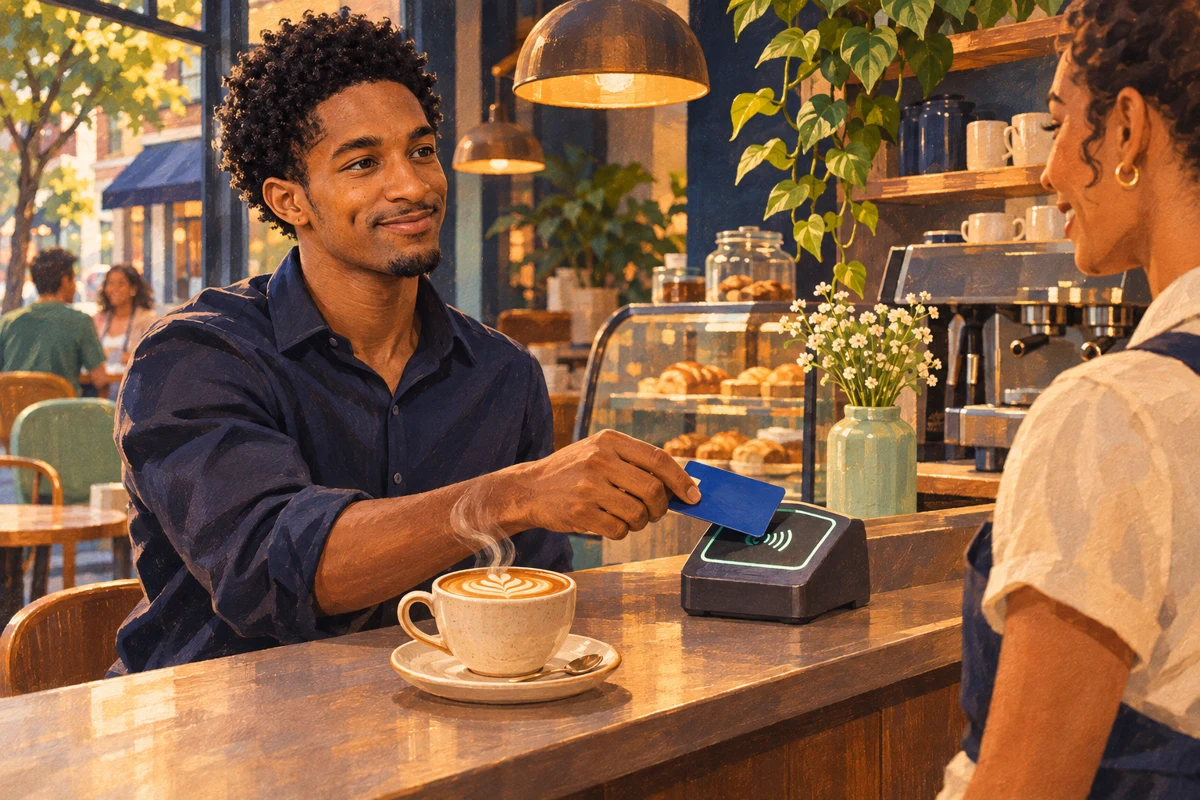
Cardholder
Myke uses a card issued by his bank to pay for coffee.
CARD PAYMENTS LAB
Myke buys a vanilla cappuccino. Follow the message through four parties and see what Visa’s network does at each step.
Run the transactionPick a scenario. Step through the messages or run the full scenario.
Messages appear in the order shown above.
Simplified double-entry example. Authentication and authorization alone create no entries here.
| Event | Debit | Credit | Amount |
|---|
Myke uses a card issued by his bank to pay for coffee.
Harbor Café accepts the payment and submits the purchase.
The merchant’s acquiring institution connects payment acceptance to the network. A processor can provide technology on its behalf.
Myke’s issuing bank manages the account and ordinarily approves or declines the authorization.
Authorization asks the issuer whether the purchase can go ahead. Capture tells the acquiring side to submit an approved purchase for processing. Clearing exchanges the transaction details. Settlement moves funds between financial institutions, with merchant funding following the acquiring arrangement.
A timeout can hide a decision the issuer already made. The simulator looks up the original result. An operation key suppresses a duplicate command, and the webhook example deduplicates by event ID. A refund is a merchant-initiated credit. A dispute is a separate process typically initiated through the cardholder’s issuer and is outside this simulator.
I’m Myke. After more than a year working at Visa, I wanted to share what I’ve learned about how card payments move through the ecosystem. I picked a vanilla cappuccino because an everyday tap is an easy way to see what each party does.
Independent educational project using public information. The Visa mark identifies the network in the diagram. PayWorld is unaffiliated as a product and processes no payments, account numbers, or internal data.